Inside The Irish Music Export Engine: How Ireland built its reputation with an artist-first culture
Oct. 12, 2026
By Niall Byrne
A deliberate strategy of artist-first infrastructure-building, a post-Brexit pivot, and a new generation of export-ready artists have turned Ireland into one of the most buzzed-about music markets in the world.
There is a historical shorthand for Irish success on the world stage: “the luck of the Irish”. It is a term that comes packaged with a dose of unintended derision, as if every breakthrough was a happy accident, not a product of deliberate intent.
Irish artists have been riding high internationally for several years now - accumulating accolades and fanbases wherever they go. Luck is not the central reason for it. It’s not chance or charm but the result of work, design and strategy.
On metrics, Irish artists have been doing well at and after ESNS in recent years. In 2026, Florence Road, Madra Salach and Dove Ellis are among the most booked acts in Europe from the festival.
Success builds success
This is not a country defined by a single sound, a single city or a single demographic. The touring and record success of acts from the island include acts like Fontaines D.C., CMAT, Dermot Kennedy, and Hozier, who are well-established.
Success has now fanned out into a long roll call of acts doing the business internationally: alternative, indie and rock bands like The Murder Capital, Just Mustard, Sprints, Gilla Band, Gurriers, Inhaler, NewDad, Cardinals, Pillow Queens and Maria Somerville; folk and trad-rooted groups Lankum, The Scratch, The Mary Wallopers, Ye Vagabonds, John Francis Flynn, BIIRD, Amble and Kingfishr; hip-hop and rap acts Kojaque, Biig Piig and Khakikid; singer-songwriters Lisa O'Neill, Orla Gartland, Aoife Nessa Frances and Sorcha Richardson; dance and electronic producers Kettama, Shee, blk. and Jazzy; pop acts MOIO, Cian Ducrot and Florence Road.
Northern Ireland acts, while often drawing on UK funding primarily, are not immune to the boom. Belfast duo Bicep are one of the biggest electronic acts on the planet. Kneecap’s rowdy, politically-charged Irish language rap performances and shows of moral courage create headlines at every turn. In their slipstream, acts like Chalk, Jordan Adetunji, Sally C, and Joshua Burnside are making a name for themselves. A rising tide lifts all boats.
For an island of seven million people, this is not a normal export performance. It is the result of a decade-plus of deliberate ecosystem design, a strategic response to Brexit, and a confidence shift inside the artist community that is now visible across every tier of the industry.
“I really think our biggest thing is that people take Irish bands and artists more seriously now,” says Eleanor McGuinness, booking agent at Earth Agency (who represents Aoife Nessa Frances, Maria Somerville, John Francis Flynn, Róis and Rachael Lavelle) “So everything's kind of compounded because the success keeps happening, it’s a snowball effect.”
The Export Infrastructure
One of the key supporters of this architecture under the boom is Irish music organisation First Music Contact (FMC), which is funded by the Arts Council. FMC operates Music From Ireland (the export office in partnership with government agency Culture Ireland), Ireland Music Week (the domestic showcase and conference), Breaking Tunes (the artist portal), and is a first port of call resource and support system for new artists in Ireland.
Alongside it, Culture Ireland funds international touring. The Arts Council funds recording and development. The Basic Income for the Arts pilot scheme, soon to be made more permanent, pays a limited cohort of artists a guaranteed weekly income, removing the financial precarity that historically forced Irish artists into compromised situations or out of the industry altogether. The Grassroots Music Venues Scheme is propping up the small rooms where developing acts build their first live capability.
Critically, FMC’s services are free at the point of access and can support artists at every level in their careers. "Because we are funded by the Arts Council, every single thing we do for the bands is free," says Angela Dorgan, CEO of First Music Contact.
The strategic dividend is the artist having their own agency. Where most developing artists internationally are tied to early-stage investment, the Irish model decouples the artist from that dependency. "Music From Ireland funding you to go to a showcase, or Culture Ireland funding a tour, means you don't owe a manager or a label tour support," Dorgan explains.
The result has been space for confidence to grow in Irish songwriters. When artists are more free to make their own decisions - and not reliant on a manager or label to fund the early career change opportunities, then this also leads to happier artists, who are then more likely to express themselves as authentically as they can in their career and their music.
“It’s turning the industry upside down, so the artists are in charge,” Dorgan says. “The more agency you can give them, the more confidence they have, the better songs they write."
For incoming labels and agents, this changes the deal dynamic. Irish artists arrive at the negotiating table with leverage that their international counterparts often don't have.
Dorgan, who is also on the board of EMEE, the European Music Exporters Exchange, and helps export offices develop their own strategies, has lost count of the international labels she has helped apply for Irish tour funding for acts they have signed.
"If it's down to 'I'm signing this Manchester act or this Cork act, and they both are doing the same numbers and they're both in the genre of my label,' but the Irish act can be supported financially, and with that education and network, it's going to be cheaper for you to tour the Irish band."
The Post-Brexit Pivot
Brexit was supposed to be a problem. FMC turned it into a strategic opportunity.
"We made a plan after Brexit and our plan is coming to fruition," Dorgan says. The ESNS booking performance, she notes, "is on purpose." The plan: identify UK tastemakers who had already shown an interest in Irish artists, and engineer additional access, grow the network and reputation
"Three years after Brexit, we did six times the number of showcases in the UK than we had done running up to it,” Dorgan shares. “Now, when Irish bands turn up at showcases, people will go without hearing one note because they know our shows are going to have the best bands at them because we have a proven track record.”
UK champions also responded. Steve Lamacq has become a central figure in the UK discovery of Irish artists. "He's an important voice in the UK," says Simon Merriman, manager of buzz act Brooki and concert promoter with Singular Artists. "People listen to him; he will turn heads if he platforms bands. He was one of the first to tip Fontaines D.C., NewDad, Enola Gay, Madra Salach too."
Eleanor McGuinness has 15 Eurosonics under her belt and has seen the Irish artists' platform at showcases grow significantly. "People are paying more attention to Irish artists, they're being seen by more people, which raises their profile, and they get more bookings out of it," she says. “It's a domino effect.
The domestic showcase circuit has scaled accordingly. Ireland Music Week now functions as a serious international delegate event. SXSW have described the Music From Ireland showcase as the gold standard for how to run a national showcase. Other Voices, once a TV programme, has matured into an industry event.
"When I do work meetings in New York or Wales or LA, I'm constantly asked about the next big Irish band," Merriman says. "Ten years ago, no one gave a shit, really. Now people are chomping at the bit." At Coachella in April, four Irish acts - CMAT, Jazzy, Kettama and NewDad played the festival, and Fogarty sees the platforming of those artists as a recognition of proven talent and potential fanbase.
“Ireland can deliver on the biggest of stages, and it’s fair to say that with success comes further interest,” Adam Fogarty, Head of Music at RTÉ 2FM, Ireland’s national pop and chart radio station, says.
The confidence shift
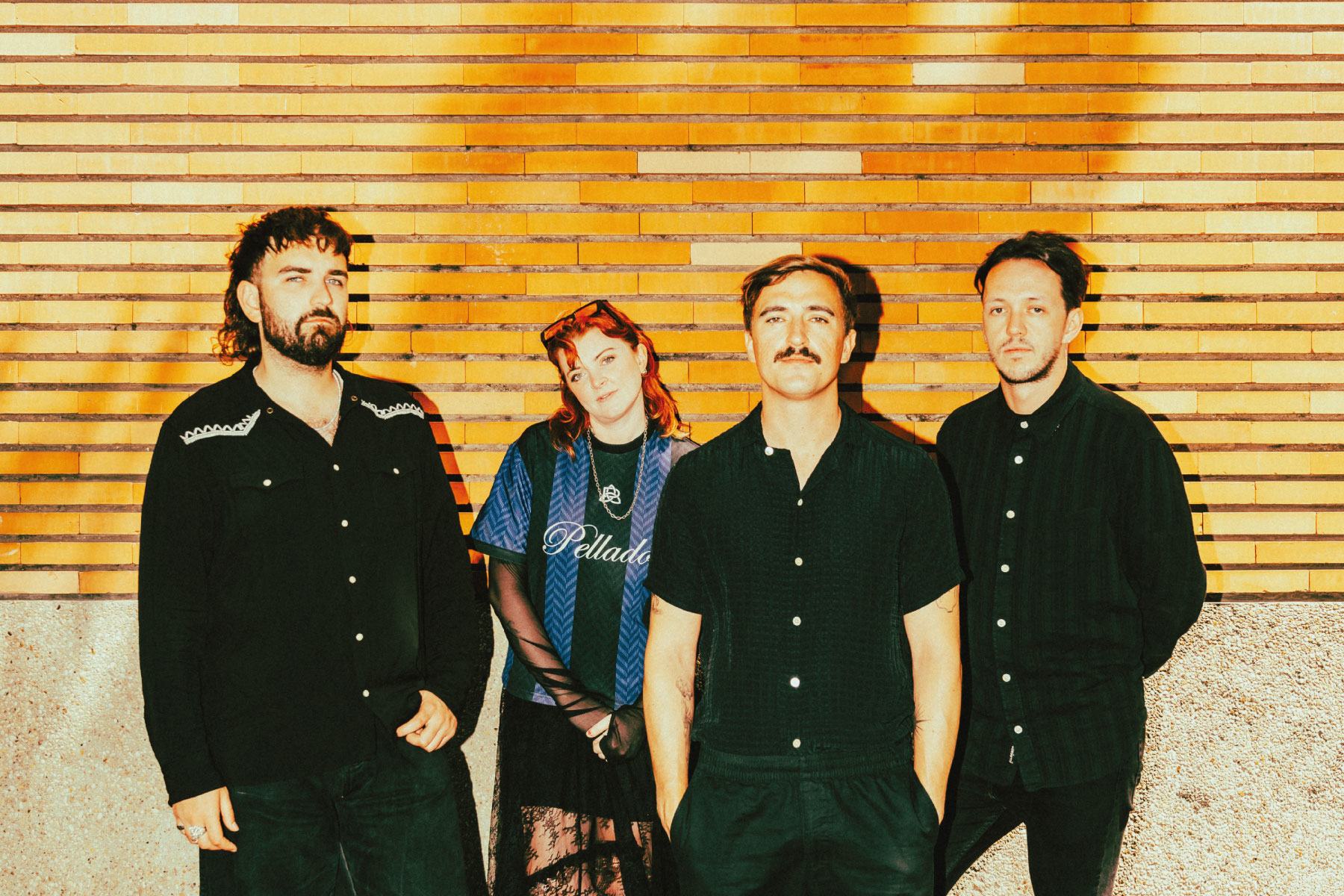
The confidence shift among Irish artists is the most consistent observation across every conversation with industry figures. Fogarty frames it from the perspective of a national platform that has been first-to-market on most of the breakthrough acts of the past decade.
"Artists are more comfortable owning their perspective, their background, and the influences that shape them. Whether that's rooted in tradition, language, or a more modern, diverse experience of Ireland today. That authenticity is what's resonating."
Merriman's A & R contacts are using sharper language. "I've heard A&R people describe this new batch of Irish artists as arrogant in a positive sense. Meaning they have confidence in their songwriting, and they are lacking in self-doubt. They are also ambitious in where they want to take it. They are no longer content to just play the local venues."
“Success brings success," says Gugai, the Galway promoter with Róisín Dubh venue and the booker with Galway International Arts Festival. “People get emboldened by the success of certain artists. Artists who see Lankum get really big, and might have been nervous to go out and play their trad-based folk music, get this huge boost from it, because Lankum are doing it on an international stage.”
Gugai cites CMAT as a prime example. The Irish country pop star gets the crowd at her gigs to dance the Dunboyne Co. Meath two-step, an extremely colloquial reference that her audiences embrace. "She doesn't sanitise anything for an international audience. She trusts them to understand her." That export logic has been validated repeatedly. This local specificity is global.
For incoming agents and labels, that means trust is now baked into the emerging journey. "There's growing trust in the Irish pipeline in delivering amazing talent that is export-ready," Fogarty notes.
The commercial implication is that Irish artists are arriving export-ready earlier in their development cycles. Agents are now signing Irish acts pre-release, in some cases pre-single. Emerging Irish talent, like Brooki and Limerick band THEATRE, are increasingly visible on the showcase circuit before releasing any music. It means competition for Irish artists is intensifying. The window for early signings is narrowing.
Irish artists are political
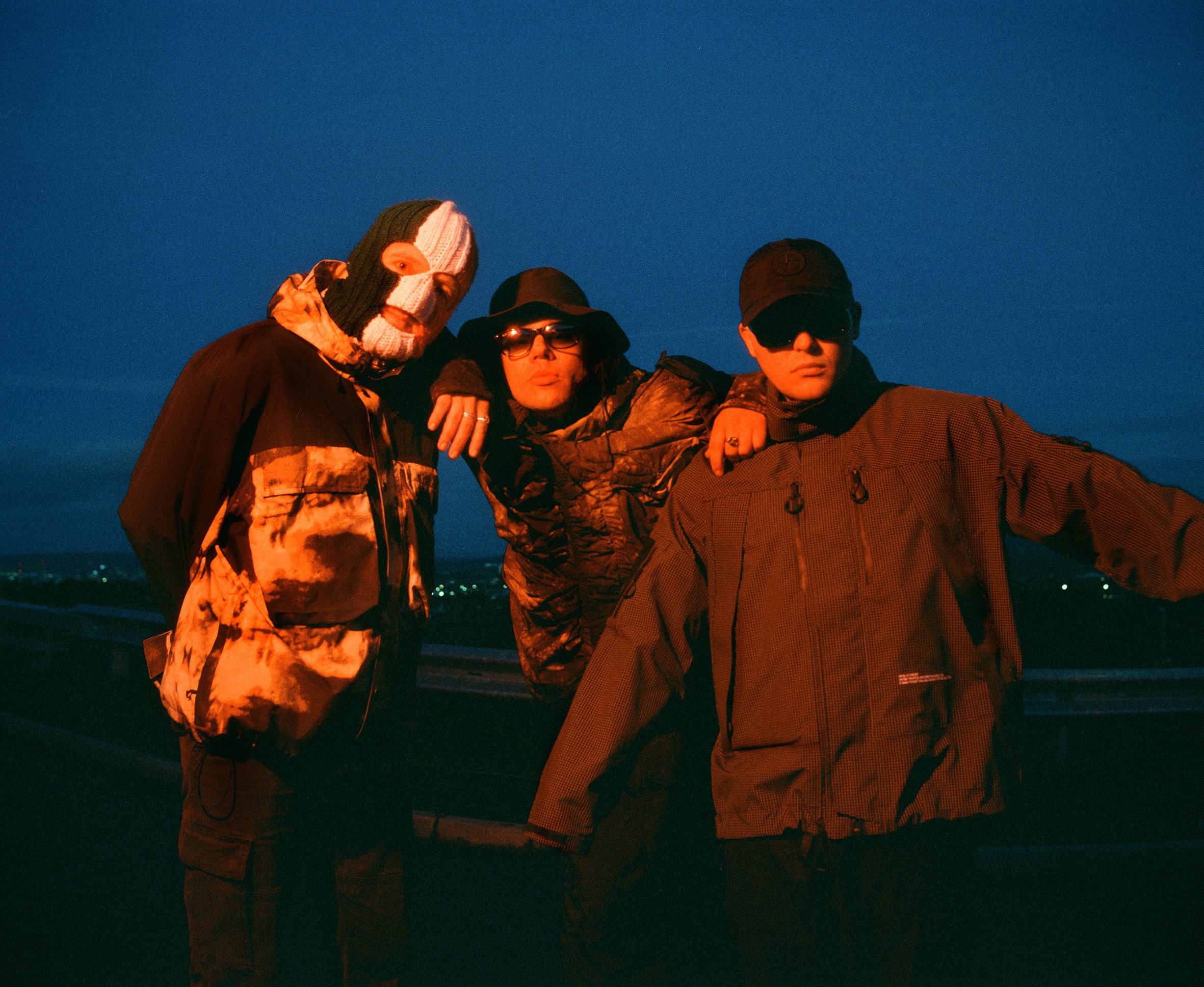
The political dimension is also worth noting commercially, not just culturally. Kneecap, Fontaines D.C., Lankum and others are operating with explicit political positioning that, in earlier eras, would have been flagged as commercial risk. The current generation is treating it as the opposite.
“This generation of Irish musicians is not afraid to bring politics into it, as we’ve seen them do at international festivals like SXSW and The Great Escape,” Gugai notes. “They're not afraid to stand up and say, ‘No, this shouldn’t be happening’”.
The international response suggests that having moral authority on issues like Palestine, boycotting problematic festival sponsors and speaking up about issues at home in Ireland - the lack of housing, technofeudalism, the rise of the far-right and opportunities for young people- doesn’t stall a career; it can enhance it, particularly among younger audiences.
“Some of them, like Kneecap, are doing it to the detriment of their own career," Gugai observes, referring to the cancellation of their US touring visas after Coachella 2025 and their UK terrorism charge, which was dropped last summer. "I think brave is the only word you can use."
The Takeaway For Industry
For booking agents, labels, sync teams, promoters and festival programmers, the Irish story offers a working case study in how strategic public investment in artist development can produce disproportionate commercial outcomes in a global market.
Or, in Dorgan's framing: "We don't pick the bands. All we've done is put the milk bottle around it. The cream is still rising in the way it always did."
The cream, right now, is rising in unusual volume. The infrastructure is built to keep it coming. The confidence is there. The talent is present. And crucially, the audience is real - both at home, where Irish people are buying into their own scene with a pride and enthusiasm that was not always guaranteed, and abroad, where the question is no longer whether the world will pay attention to Irish music, but which Irish artists it will discover next.